
Why Your Business Still Relies on You for Everything
Leadership, Service Businesses, Scaling, Coaching
You Built a Great Business. So Why Does It Still Need You for Everything?
Your business is successful on paper. Revenue is over $2M, the phones keep ringing, clients trust you, and from the outside it looks like you’ve “made it.” But inside, it feels very different. Every decision, every exception, every fire still seems to land on your desk. Time off feels risky. Growth feels exhausting. And somehow, despite the team around you, the business still seems to need you for everything.
The $2M Bottleneck: When Success Turns into a Ceiling
Picture this: you own a growing service company bringing in $2M+ a year. You’ve got a solid reputation, a handful of key people, and a full client roster. Yet your calendar is wall-to-wall. Your team waits for your approval before moving. Clients ask for you by name. Proposals, pricing, hiring, tough client conversations, even vendor decisions — they all route back through you, the owner.
You’re proud of what you’ve built — and you should be. But you’re also the bottleneck. Not because you’re controlling or incapable, but because the way you had to operate to get here has quietly turned into the way the business expects you to operate forever. That’s the trap many high-performing service-business owners fall into without even noticing.
Meet the Villain: The Hero-Operator Trap
I call this the hero-operator trap. It’s what happens when the business is built on your personal heroics — your speed, your judgment, your relationships, your ability to “just figure it out” — and then keeps running that way long after it should have grown past needing a hero in every situation.
The hero-operator trap isn’t about ego. It’s about habit. Early on, your willingness to do whatever it took kept clients happy and cash coming in. You said yes, you jumped in, you fixed things. Those habits built the business. Over time, though, they quietly become the rules everyone else follows:
Clients learn that “if it really matters, go to the owner.”
Team members assume big decisions are “above their pay grade.”
Exceptions become normal, and only you know how to navigate them.
The default solution to any problem is: “Ask the owner.”
The same instincts that built your business are now quietly capping its growth. Not because they were wrong, but because they were never meant to be permanent. You didn’t start this to be the hero forever. You started it to build something that could stand on its own — and give you options: to grow, to step back, or even to exit on your terms.
Insight: Being the hero is often a season, not a strategy. The turning point is realizing it’s time for your role — and your systems — to evolve.
My Story: From Operator in Every Seat to a Business I Could Sell
Before I launched Steve Thompson Coaching, I was in the same place many of my clients are now. I owned a service business that I had grown from the ground up. In the early years, I wore every hat: sales, delivery, hiring, finance, client rescue missions at 10 p.m. You name it, I did it. And like you, I was proud of that. It felt like leadership. It felt like commitment.
As the business grew, the complexity grew even faster. More clients, more team, more moving parts. I told myself, “This is just what success feels like.” But the truth was harder to admit: I had built a business that couldn’t run without me, and I was the one keeping it that way. Not intentionally — but through the habits I’d never upgraded.
There was a moment that finally woke me up. I took what was supposed to be a short break, and within days my phone lit up. Pricing questions. Client escalations. A hiring decision stuck in limbo. Nothing moved without me. That’s when I realized: if I ever wanted the option to sell, or even just to step back, I needed to build a real operating system — not just a business that ran on my effort and memory.
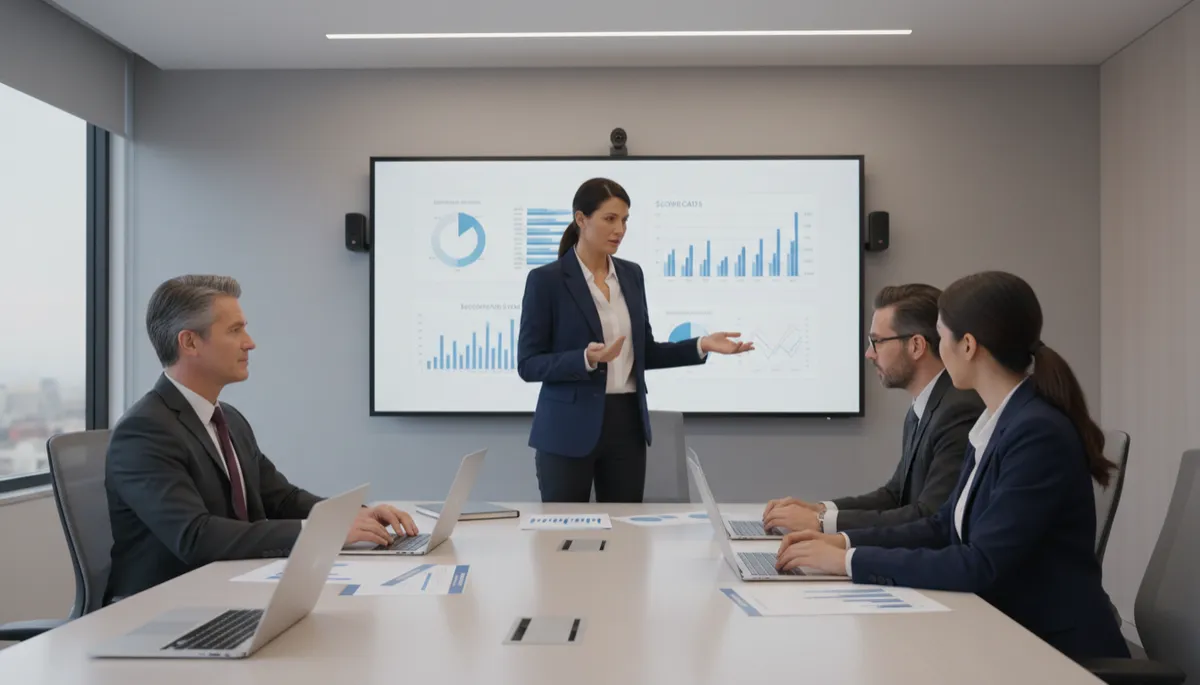
Scene of a small leadership team in a modern conference room, collaborating around a table with...
A simple, shared operating system turns owner dependence into team-driven execution.
Over time, I shifted from being the hero in every situation to being the architect of how the business ran. I clarified roles. I put structure around priorities and meetings. I learned how to lead through systems instead of sheer willpower. That shift is what ultimately made it possible for me to sell the business — and know it would keep serving clients and supporting the team without me at the center of everything.
That experience is why I now help other owners, through Steve Thompson Coaching, make the same transition: from operator to leader, from hero to builder of a business that can thrive without them in every seat.
The Shift: From Owner-Driven to Operating-System Driven
Breaking out of the hero-operator trap isn’t about copying someone else’s playbook. It’s about installing an operating system that fits you, your team, and your business. At Steve Thompson Coaching, I use the MVP framework — Mindset, Vision, Plan — alongside the Bloom Growth operating system to help owners build exactly that: a way of running the business that doesn’t depend on them doing everything personally.
While every business is different, the core elements of a healthy operating system are remarkably consistent. Three of the most powerful are:
1. Clear Priorities Everyone Can See
When everything feels urgent, nothing truly moves. A strong operating system forces clarity: What are the top priorities this quarter?What does success look like in the next 90 days? Instead of you holding the whole strategy in your head, it’s written, shared, and revisited regularly. The team can see what matters most and align their decisions to it — without asking you every time.
2. Accountable Seats Instead of Vague Roles
In an owner-dependent business, job descriptions are fuzzy and responsibility defaults to you. In a system-driven business, every key function has an accountable seat — a clear owner for results in that area. Sales, operations, finance, client success, marketing: each one has a person who knows, “This is mine.” That doesn’t mean they do all the work, but they are responsible for making sure it gets done and gets done well.
This simple shift changes the question from “Why didn’t I catch that?” to “Who owns this seat, and what support do they need to succeed?” It moves control from your inbox into the structure of the business itself.
3. A Weekly Meeting Rhythm That Runs the Business
Many owners hate meetings because their meetings don’t actually run the business — they just share updates and create more to-dos for the owner. A strong operating system uses a simple, disciplined weekly meeting rhythm where the leadership team looks at a clear scorecard, reviews priorities, solves real issues, and leaves with specific owners and next steps.
Over time, that rhythm becomes the heartbeat of the business. Instead of people waiting for you in the hallway or in your inbox, issues go into a shared agenda and get solved together. You’re still in the room, but you’re not the only problem-solver. The business starts to think for itself.
Pro Tip: You don’t need more meetings — you need better ones. A consistent weekly rhythm with a simple agenda can replace dozens of ad-hoc “Got a minute?” interruptions.
Is Your Business Owner-Dependent? A Quick Self-Check
If you’re wondering whether you’re stuck in the hero-operator trap, run this short self-check. Answer honestly — no judgment, just data to work with:
Decisions: Do most important decisions (pricing, hiring, key client issues) still require your direct approval?
Time Away: Can you step away for two weeks with minimal contact — and return to a business that moved forward without you?
Role Clarity: Does your team clearly know who owns what, or do questions default to you when things are unclear?
Meetings: Do your meetings actually drive decisions and accountability, or do they mostly create more work for you?
Future Options: If you wanted to sell or step back in 3–5 years, would a buyer see a business that runs on systems — or on you?
If you answered “yes” to the first four and “I’m not sure” or “no” to the last one, your business is likely more owner-dependent than you want it to be. That’s not a failure. It’s a sign you’ve outgrown the operating model that got you here — and it’s time to build the one that will carry you forward.
Your Path Forward: Not Someone Else’s Playbook
At Steve Thompson Coaching, I don’t hand you a generic formula and tell you to squeeze your business into it. Together, we look at the whole picture — you as a person, your goals, your team, your numbers, your reality — and then we design an operating system that fits. Mindset, Vision, and Plan are built together, so the systems you install actually support the life and leadership role you want, not just more growth for growth’s sake.
The goal isn’t to turn you into a distant, hands-off owner overnight. It’s to help you lead with clarity instead of reacting to chaos, to step back from the day-to-day into a role you actually want, and to create real options: grow, lead, or exit on your own terms. That’s the path I walked as an owner. It’s the path I now help other service-business leaders walk every day.
Ready to Stop Being the Bottleneck?
If reading this feels uncomfortably familiar, you’re not alone — and you’re not stuck. The habits that built your business don’t have to be the ones that run it forever. You can keep what makes your company special and build the systems and leadership structure that free you from needing to be in every decision.
Next Step: If you suspect your business is owner-dependent, it’s time to explore a different way of leading.
Here’s how we can start, together:
Book a discovery call with Steve Thompson Coaching to talk through where your business is today and where you want it to be.
Create a plan that aligns your mindset, vision, and operating system — including clear priorities, accountable seats, and a weekly meeting rhythm that actually runs the business.
Execute and realize the freedom to lead at the right level, reclaim your time, and build a business that can grow, thrive, or even be sold without needing you in every seat.
You’ve already done the hard part — building a great business. Now it’s time to build the operating system and leadership structure that let it stand on its own, so you can finally experience the freedom, impact, and options you’ve been working toward all along.
Ready to find your root?
Book a free sample session and map out what forward looks like for you.