Key Question Before Selling Your Business
Exit Planning, Leadership, Business Coaching
Before You Sell Your Business, Ask Yourself This One Question
If you are a service-business owner who feels pulled between growing harder, building a stronger team, or quietly planning your way out, there is one question that matters more than timing, valuation, or deal structure: “Who am I when this isn’t mine anymore?” Everything else in your exit – the numbers, the systems, the negotiations – flows from how honestly you answer that question and how intentionally you prepare for both sides of the transition: the business and the person who built it.
Mindset First: The Question Behind Every Exit Decision
When owners talk about selling, they usually start with surface questions: What’s my business worth? Is now the right time? Will a buyer even be interested? Those are important, but they are not the starting point. The real starting point is mindset – your relationship to the business you have built and the role it plays in your identity, your security, and your future vision of a good life.
At Steve Thompson Coaching, we use the MVP framework – Mindset, Vision, Plan. Mindset comes first for a reason. Until you are clear on what you want your life and leadership to look like after the business, it is almost impossible to make good decisions about whether to grow, restructure, or prepare for exit. You end up reacting to chaos instead of leading with conviction.
Key Takeaway: Exit readiness is not just about the business being ready to sell; it is about you being ready to let go of what you have built and step into what comes next.
Systems for Value: Why Buyers Pay for Businesses, Not Heroes
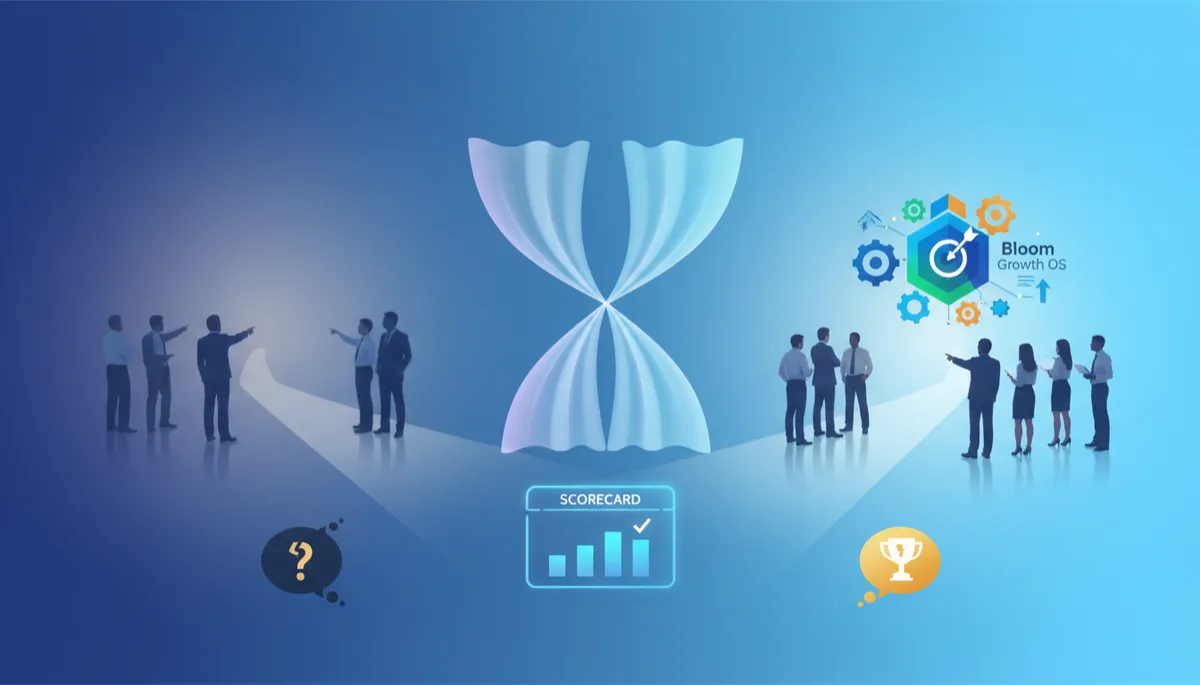
From a buyer’s perspective, your story and reputation matter – but they are not what they are buying. Buyers pay for businesses that operate independently of the owner. They pay for predictable cash flow, consistent delivery, and a leadership team and operating system that can carry the company forward when you are no longer in every meeting, solving every problem, or holding every client relationship personally.
That independence does not happen by accident. It is built through systems: how you set priorities, run meetings, track performance, and develop leaders. This is where the Bloom Growth operating system comes in. For owners whose businesses have outgrown generic frameworks and ad-hoc tools, Bloom Growth provides the structure that transforms a personality-driven operation into a system-driven company with real enterprise value.
Clear priorities and scorecards so the team knows what matters without you in the room.
A cadence of focused, effective meetings that drive accountability instead of draining energy.
Defined roles and responsibilities that allow you to step back from “every seat” into the seat you actually want.
Whether you plan to sell or to keep building, these systems are non-negotiable. They increase valuation if you exit, and they increase freedom and sustainability if you stay. In other words, building systems for value is never wasted work – it is the foundation of every attractive, resilient business.
Coaching for Identity: Who Are You When This Isn’t Yours Anymore?
Systems answer the question, “Can this business thrive without me?” Coaching answers a different, often more confronting question: “Can I thrive without this business?” For many owners, the company has been their identity for years, sometimes decades. Your calendar, your status, your relationships, even your sense of usefulness are tied to being “the owner.”
That is why the most overlooked question in exit planning is the one we started with: “Who am I when this isn’t mine anymore?” If you do not explore that question early, you risk getting the deal you thought you wanted and waking up the morning after the sale feeling strangely empty, unanchored, or even resentful – despite the full bank account.

The hardest part of an exit is rarely financial; it is redefining who you are.
Coaching for identity is not therapy and it is not generic motivation. It is a structured, honest conversation about:
What kind of contribution you want to make after you sell – or after you step back.
How you define success when “revenue” and “headcount” are no longer your primary scorecards.
What a fulfilling week looks like when you are not needed in every operational decision.
At Steve Thompson Coaching we work on systems and self together, because separating them does not reflect reality. Your willingness to install systems that reduce your centrality is directly tied to how safe and excited you feel about the identity you are growing into next.
Exit Readiness from Someone Who Has Been There
The perspective here is not theoretical. It is grounded in lived experience: the journey from operator to owner, and ultimately to exit. When you have built something from the ground up, selling is not just a transaction; it is a transition through several emotional seasons – anticipation, doubt, relief, and, for many, a quiet grief that can catch you off guard.
Before the sale, there is the constant question: “Will this deal actually close?” You are balancing negotiations with day-to-day operations, trying to keep your team steady while you carry information you cannot yet share. Exit readiness in that phase looks like strong systems, clean numbers, and a leadership team that can confidently meet with buyers and demonstrate that the business is not a one-person show.
After the sale, the questions change. The first morning you wake up without urgent emails, without back-to-back meetings, without the weight of payroll on your shoulders, there is a rush of relief – and then, often, a surprising silence. For many owners, that silence feels unfamiliar, even unsettling. You realize how much of your identity was wrapped up in being needed, in being the decision-maker, in being “the one” everyone turned to.
Personal insight from that season: freedom is not just the absence of responsibility; it is the presence of a new, chosen purpose. Without intentionally defining that purpose, it is easy to drift, to second-guess the exit, or to jump too quickly into the next venture just to feel important again. True exit readiness means you have done the inner work before the wire transfer clears.
Build to Exit or Build to Keep? The Strategic Choice in Front of You
Not every owner should sell. Some should re-design their role, strengthen their leadership team, and keep a business they genuinely love – but on different terms. Others are carrying a company that no longer fits their season of life, and an intentional exit is the most honest and healthy path forward. The challenge is that from the middle of complexity and fatigue, it can be hard to know which is which.
The good news is that the early steps look remarkably similar in both scenarios:
Clarify your mindset and personal vision beyond the business.
Install a Bloom Growth operating system so the business can run without your constant intervention.
Develop a leadership team that can carry the company forward and give you real options.
Once those are in place, the choice to build to exit or build to keep becomes clearer and far less emotional. You are no longer deciding from a place of exhaustion or overwhelm; you are deciding from a place of clarity and control.
Pro Tip: The best time to start exit planning is not when you are ready to sell. It is when you want the option to sell – or to stay – on your own terms.
The Camino Series: A Signature Story About Walking Your Own Path
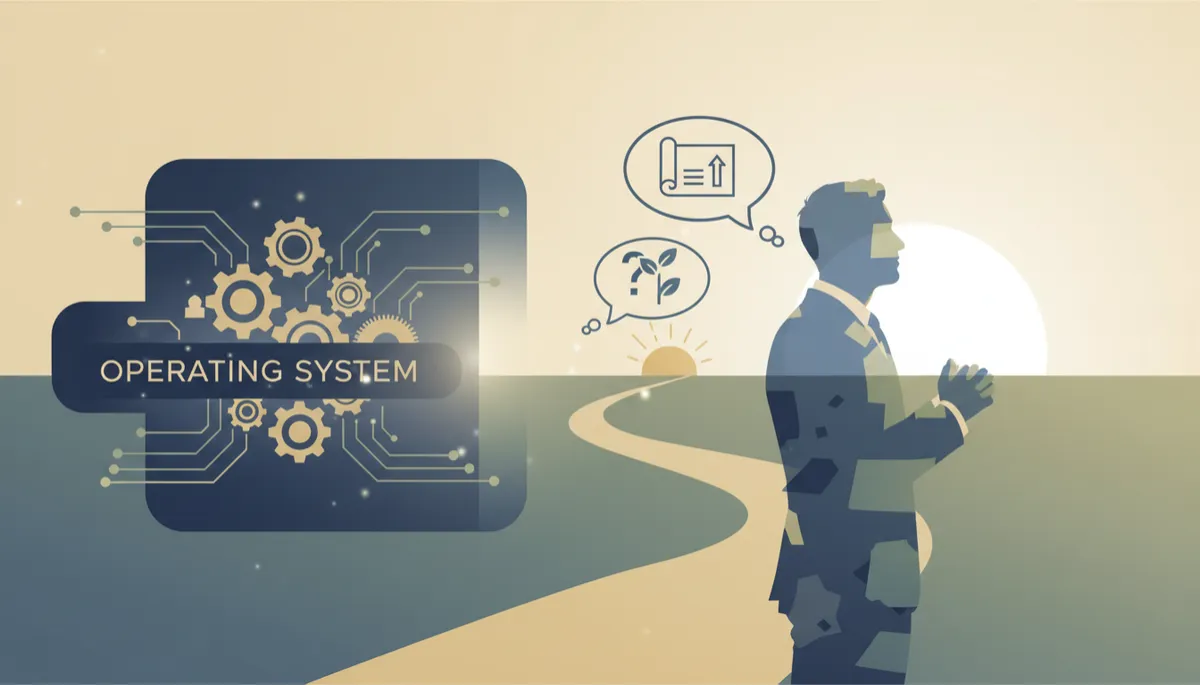
There is a reason the signature brand story at Steve Thompson Coaching draws from the Camino – the ancient walking routes across Spain that thousands of people travel every year. On the Camino, there is no single “right” pace or path. Some walk fast and light, others slow and reflective. Some stop in every village; others push through long, quiet stretches. The only real rule is this: you carry your own pack, and you walk your own journey.
Building, leading, and exiting a business is a lot like that. You can borrow maps, but you cannot borrow someone else’s feet. Copying another founder’s playbook – their timeline, their valuation target, their definition of success – will not carry you through the lonely or uncertain stretches of your own path. What does carry you is clarity: about who you are, what you value, and where you are heading beyond the next deal or milestone.
The Camino story is not about escape; it is about intentional movement. In the same way, exit planning is not about checking out of your business. It is about walking forward with a clear sense of self, supported by systems that keep the business healthy whether you stay, step back, or eventually move on.
Your Next Step: A Conversation About Your Path, Not a Playbook
If your business has grown more complex than you can comfortably run alone, and you are unsure whether the answer is to double down, to build a stronger team, or to quietly explore an exit, you do not need another generic framework. You need a clear, honest conversation about your path – your mindset, your vision, and the systems that will support whichever direction you choose.
At Steve Thompson Coaching, we combine lived experience of building and selling a business with the Bloom Growth operating system and the MVP framework to help you answer three critical questions:
Who am I when this is not mine anymore – and who do I want to become?
What systems and leadership do I need so the business can thrive without me?
Am I building to exit, or building to keep – and what does that practically change in the next 12–24 months?
If you are ready to explore those questions in a confidential, judgment-free space, you are invited to a free conversation about whether to build to exit or build to keep. No forced formulas, no pressure to decide on the spot – just a structured discussion to illuminate your options and outline a practical next step.
Here is how to begin:
1. Book a discovery call with Steve Thompson Coaching.
2. Together, we will create a plan aligned with your mindset, your vision, and your business reality.
3. You will execute and realize the freedom to grow, lead, or exit on your own terms – knowing exactly who you are and where you are heading next.
Before you sell your business, ask yourself the one question most owners avoid. Then, surround yourself with the systems, coaching, and support to answer it well – and to walk your own Camino, one intentional step at a time.
Ready to find your root?
Book a free sample session and map out what forward looks like for you.